





Are Hip and Joint Chews Safe for Dogs?
A lot of dog owners ask the same question right when stiffness starts showing up - are hip and joint chews safe for dogs, or are they just another treat with a health claim on the label? It is a fair question, especially if your dog is getting older, slowing down on walks, or hesitating before stairs and jumping.
The short answer is yes, hip and joint chews are generally safe for most dogs when they are made with well-known ingredients, used as directed, and chosen with your dog’s size, age, and health history in mind. The longer answer matters more, because not every formula is the same, and safety depends on what is inside the chew, how much your dog gets, and whether your dog has any sensitivities or medical conditions.
Are hip and joint chews safe when used daily?
For many dogs, daily use is exactly how joint chews are meant to work. Ingredients like glucosamine, chondroitin, MSM, and collagen are typically given consistently over time rather than once in a while. These are support ingredients, not quick fixes, so the benefit usually comes from regular use.
That said, safe daily use depends on following the serving directions. More is not better here. Giving extra chews because your dog seems sore can lead to stomach upset or unnecessary ingredient overload, especially in smaller dogs.
It also helps to remember that a joint chew is still something your dog eats every day. Flavorings, binders, sweeteners, and added calories all count. If your dog is on a weight management plan, has a sensitive stomach, or already gets several supplements, daily use should fit into the bigger picture of their routine.
What makes a hip and joint chew safe?
Safety usually starts with ingredient clarity. A well-made chew should tell you exactly what active ingredients it contains and how much of each ingredient is in every serving. That is a better sign than a vague label that promises mobility support without explaining what is doing the work.
The most common joint support ingredients are familiar for a reason. Glucosamine is widely used to support cartilage health. Chondroitin is often paired with it for joint function. MSM is included for connective tissue support, and collagen is commonly added to help support joints and mobility. These ingredients are popular because they are broadly recognized, easy to understand, and fit naturally into preventative care routines.
The chew itself should also be appropriate for dogs. That sounds obvious, but it matters. Products made specifically for canine use are formulated around dog-safe ingredient choices and serving sizes. Human joint supplements can contain flavorings, sweeteners, or added compounds that are not a good fit for dogs.
Texture matters too. A soft chew is convenient, but it should still match your dog’s chewing ability. Senior dogs, extra-small dogs, and dogs with dental issues may do better with a softer, smaller chew that is easy to eat with meals.
Common side effects to watch for
Even safe supplements can cause mild side effects in some dogs. The most common issue is digestive upset. You might notice loose stool, gas, reduced appetite, or occasional vomiting if a new chew does not agree with your dog or if you start with too much too fast.
This does not always mean the formula is bad. Sometimes it just means your dog needs a slower start. Introducing a chew with food and building up to the full serving can help, especially for dogs with sensitive stomachs.
Allergic reactions are less common, but still possible. If a chew contains chicken, beef, pork gelatin, shellfish-derived glucosamine, or other animal-based ingredients, dogs with known food sensitivities may react. Itching, ear flare-ups, stomach upset, or skin irritation can all be signs that an ingredient is not a fit.
If your dog has severe vomiting, facial swelling, trouble breathing, or extreme lethargy after taking a chew, stop using it and contact your veterinarian right away.
When hip and joint chews may not be the right choice
Hip and joint chews are not automatically right for every dog. Puppies usually do not need them unless your veterinarian recommends support for a specific reason. Dogs with chronic medical conditions may also need a more tailored plan.
If your dog has diabetes, pancreatitis, food allergies, kidney disease, liver disease, or a history of digestive issues, take a closer look before adding any chew. The active ingredients may be fine, but the full formula could include fats, proteins, or fillers that do not work well for your dog’s situation.
Dogs on medications also deserve an extra pause. Joint chews are often simple, but it is still smart to check with your veterinarian if your dog takes anti-inflammatory medication, prescription pain support, or anything long term. A supplement should make the routine easier, not more complicated.
How to choose a safer formula
If you are shopping for a joint chew, think less about flashy promises and more about practical fit. A safer choice usually has recognizable ingredients, clear serving directions, and a formula built around a specific purpose.
Look for active ingredients that are easy to identify, such as glucosamine, chondroitin, MSM, and collagen. Check whether the serving size matches your dog’s weight. A formula that works well for a large dog may not be ideal for a small or extra-small dog if portioning is awkward.
It is also worth checking the inactive ingredients. Soft chews need structure and flavor, but shorter, cleaner ingredient lists are often easier for dog owners to evaluate. If your dog is picky, flavor matters. If your dog has sensitivities, simplicity matters even more.
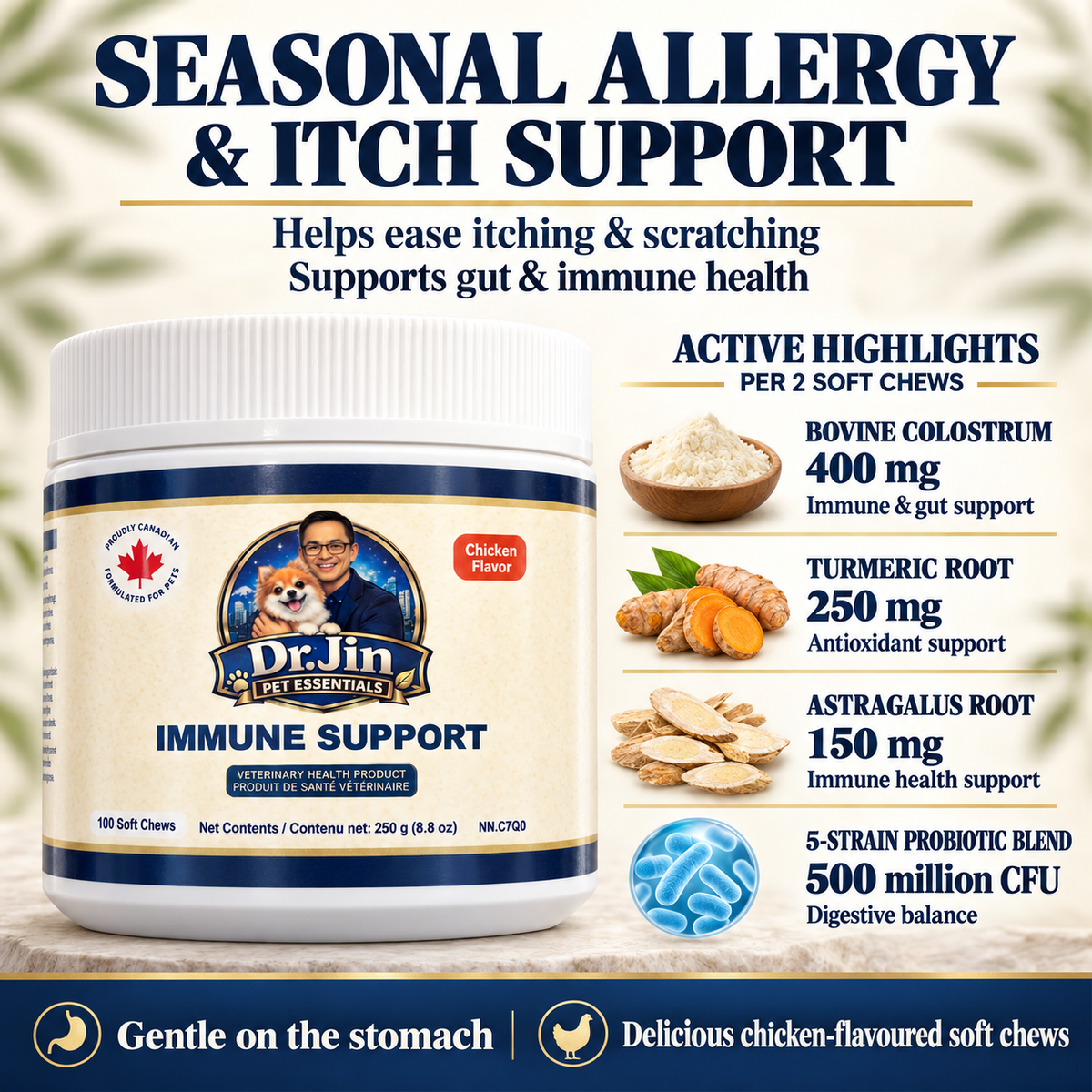
Brand transparency can tell you a lot. When a company clearly explains what a product is for, who it is made for, and how to use it, that usually creates more confidence than a label filled with broad wellness language. Dr. Jin Pet Essentials takes that focused approach by centering formulas around specific outcomes like mobility support and making them easy to use as part of a normal feeding routine.
Are hip and joint chews enough for joint support?
Sometimes yes, sometimes no. That depends on what your dog is dealing with.
For mild stiffness, early signs of aging, or preventative support in active adult dogs, a daily joint chew may be a helpful part of the routine. It can be a simple, low-stress way to support mobility before issues feel more serious.
But if your dog is limping, crying out, struggling to stand, dragging a leg, or suddenly refusing movement, a chew is not the main answer. Those signs call for veterinary attention. Supplements can support joint health, but they do not replace diagnosis or treatment when pain is significant.
Weight management also plays a huge role in joint comfort. A good chew can support mobility, but carrying extra pounds adds stress to hips, knees, and elbows every day. In many cases, the best joint support plan includes both a consistent supplement and an overall routine that helps keep your dog at a healthy weight.
How to start safely at home
If you are trying a hip and joint chew for the first time, keep it simple. Read the label carefully, use the correct serving for your dog’s size, and give it with food if your dog has a sensitive stomach.
Then watch your dog for the first couple of weeks. You are looking for two things: tolerance and consistency. Tolerance means no digestive trouble, unusual itching, or behavior changes. Consistency means you can actually give it daily without turning it into a struggle.
That second part matters more than people think. The best supplement routine is one you can keep up with. If the chew is easy to serve, enjoyable for your dog, and built around clear mobility ingredients, it has a much better chance of becoming part of everyday preventative care.
The real answer to are hip and joint chews safe
Yes, hip and joint chews are safe for many dogs, but safety is not just about the category. It is about the formula, the serving size, and the dog in front of you. A well-made chew with recognizable joint support ingredients can be a practical, convenient option for daily mobility care. A poorly matched product, even with good intentions, can cause unnecessary issues.
If your goal is to support your dog early, keep routines simple, and choose products with a clear purpose, joint chews can make a lot of sense. Start with a formula that is easy to understand, easy to serve, and easy for your dog to tolerate. Better care does not need to feel complicated to be worthwhile.