





Introduction: Dog longevity supplements are daily nutritional formulas made to support healthy aging in senior dogs, and they work alongside food rather than replacing treats, medicines, or veterinary care.
A first-time owner usually meets this category in a confusing way: a jar of soft chews arrives with words like longevity, cellular health, and joint support on the label, sitting a shelf away from biscuits and nowhere near the prescription counter. It is fair to ask what the product actually is, what it is supposed to do on a normal Tuesday, and where it stops. Understanding the category first makes every later brand comparison easier, because you stop judging a daily nutritional product against a medicine's job and start judging it against a diet's job. This guide walks through the definition, the regulatory lines between treats, supplements, and drugs, and why format and labeling matter so much for older dogs.
What a Dog Longevity Supplement Does in Everyday Nutrition
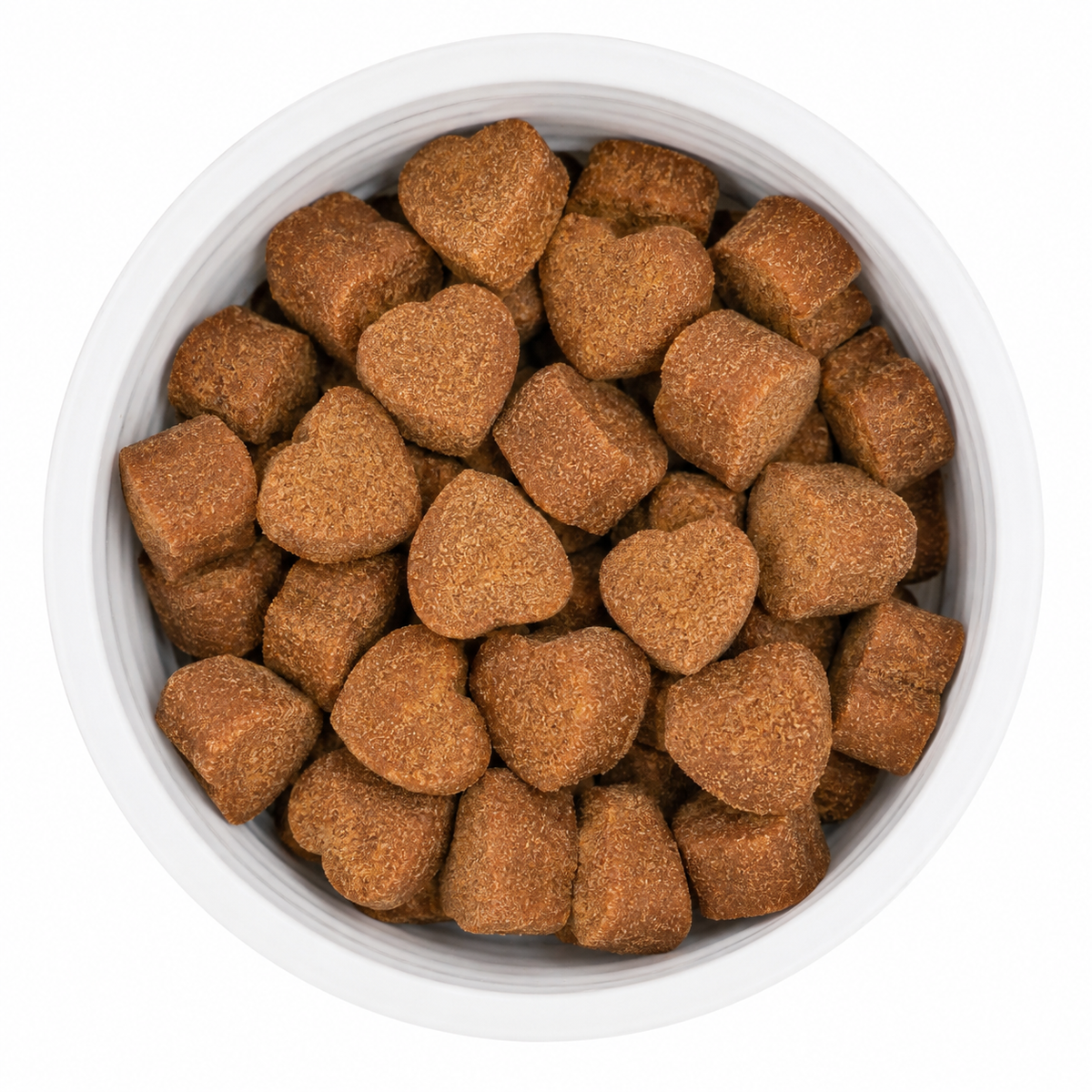
In everyday use, the phrase dog longevity supplements describes a category of daily nutritional products made for dogs in their later years — often from around age seven for many breeds, earlier for large dogs that age faster. The "longevity" part points to healthy aging support, not to a longer lifespan and not to reversing aging. In practice that means steady nutrient intake aimed at the systems that quietly change with age: joints and comfortable movement, digestion and gut balance, skin and coat condition, and everyday energy and alertness. The right way to picture the category is a daily top-up to a complete diet, not a substitute for one. That definition matters because "longevity" is a friendly word that can mean very different things on different labels. Some products are single-nutrient items: one glucosamine chew, one fish oil capsule, one probiotic powder. Others are multi-ingredient formulas that bundle several nutrition layers into a single serving. For a first-time owner, the multi-ingredient type is the one that changes daily life, because it turns a routine of three or four separate bottles into one item the dog eats without a fight. Multi-ingredient formulas are read from the per-serving panel, not the front of the jar. Longevity Soft Chews for Dogs from Dr. Jin Pet Essentials show how that looks: brown heart-shaped soft chews with natural chicken flavor in a 100-chew, 250 g jar, with each 2-chew serving listing NMN at 200 mg, glucosamine HCl at 125 mg, chondroitin sulfate at 100 mg, a PRIOME postbiotic complex at 4 billion HTC, and L. acidophilus at 3 billion CFU. Those figures illustrate a multi-layer formula — cellular nutrition, joint nutrition, and gut nutrition in one chew — and give you a real reference point when comparing other senior dog supplements.
How Dog Longevity Supplements Differ from Treats and Prescription Medicines
These three product types get mixed up constantly, and the mix-up costs owners money and lost time. Pet food, pet supplements, and veterinary drugs are handled as different product categories, and the FDA's pet food resource is a useful plain-language reference for where feed ends and drugs begin. A treat is a food-type product built for reward, texture, and calories; its job is the moment of giving it. A supplement is built around nutrient amounts per serving. A veterinary drug is reviewed and labeled to treat, cure, or prevent a specific disease. That distinction explains why a longevity supplement is not sold as an arthritis treatment or a fix for cognitive dysfunction. A dog with a diagnosed joint condition, or one showing genuine cognitive decline, needs a veterinarian's plan, and a daily chew belongs in the background of that plan — keeping nutrient intake steady — rather than in place of it. The same logic separates supplements from treats in the other direction: a biscuit is formulated to be a pleasant extra, while a functional chew is formulated so that two pieces deliver a defined amount of specific nutrients. Same shape, same chicken smell, same eager dog; different purpose. For a first-time owner, the practical test is straightforward. Read what the label promises: language about supporting normal function, maintaining comfort, or helping keep a steady routine belongs to nutrition. Language about treating, curing, or resolving a named disease belongs to medicine, and it should come from a veterinarian rather than a jar. Once you can tell those two kinds of sentences apart, the shelf stops being confusing. That habit carries over to old dog supplements generally, including the ones sold as soft chews with a wellness angle.
Why Soft Chews and Clear Labels Matter for Senior Dogs
Format and labeling are where senior products succeed or fail in real homes, because an older dog has to actually eat the thing every day and the owner has to know what is inside it. Both points deserve more attention than they usually get.
1. How Soft Chew Formats Fit Daily Chewing Habits
Aging mouths change. Years of wear, missing or loose teeth, gum sensitivity, and a weaker bite all make hard tablets and brittle biscuits less appealing, and many older dogs simply refuse them or chew around them and leave fragments on the floor. A soft chew sidesteps that friction: it can be eaten in a couple of bites, it does not shatter, and the texture works for dogs that have started turning down crunchy items. Flavor matters just as much as texture, since a natural chicken flavor fits the taste most dogs already accept. A 100-chew jar also fits a daily habit — at two chews a day it covers roughly seven weeks, which is long enough to judge whether the routine actually sticks.
2. Why Multi-Ingredient Labels Need Clear Daily Nutrition Context
A formula that combines NMN, glucosamine, chondroitin, postbiotics, and probiotics is doing several different nutritional jobs at once, and that only means something if the amounts are stated per serving. Without per-serving numbers, a long ingredient list becomes decoration — names included for label appeal at amounts too small to matter. Declared amounts let an owner compare two jars on the same terms and understand the formula as daily nutrition rather than ingredient stacking. Supporting signals belong in the same conversation: the example product carries a Health Canada VHP number, NN. R8U8, and is made in GMP, HACCP, and ISO certified facilities, which tells you the label sits inside a documented quality system.
Conclusion
Dog longevity supplements are daily nutritional support for aging dogs, built to keep nutrient intake steady across joints, digestion, skin, and everyday vitality. They are not treats, and they are not medicines: a treat is a reward, a prescription drug treats a diagnosed disease, and a supplement sits in the middle, doing quiet daily work alongside a complete diet. Once that picture is clear, shopping gets simpler — you look for per-serving amounts you can actually read, a format your dog will eat without a struggle, and label language about supporting normal function rather than curing illness. From there, comparing specific formulas becomes a matter of matching nutrition layers to your dog's daily needs.
FAQ
Q: What are dog longevity supplements?
A: They are daily nutritional products formulated for aging dogs, usually combining nutrients that support normal function in areas that change with age, such as joints, digestion, skin and coat, and everyday energy and alertness. "Longevity" refers to healthy aging support through nutrition, not to extending lifespan or reversing aging. They are given routinely alongside a complete diet.
Q: How do dog longevity supplements differ from everyday treats or prescription medications?
A: Treats are food-type products built for reward, texture, and calories. Prescription medications are reviewed and labeled to treat a specific diagnosed disease. Supplements sit between them: they are formulated around declared nutrient amounts per serving and are given daily to support normal function, which is why they are not positioned as arthritis or cognitive dysfunction treatments.
Q: Why are many senior dog supplements made as soft chews?
A: Older dogs often deal with worn teeth, missing teeth, or a sensitive mouth, and many refuse hard tablets outright. A soft chew is easier to bite through, does not shatter, and pairs well with a flavor dogs already like, such as natural chicken. That makes a daily nutrition routine far easier to keep up than a pill schedule.
Sources / References
Related Examples
Longevity Soft Chews for Dogs 100 Soft Chews